Frames That Hit Different: How Elite Adult Cinematographers Craft the Perfect Shot
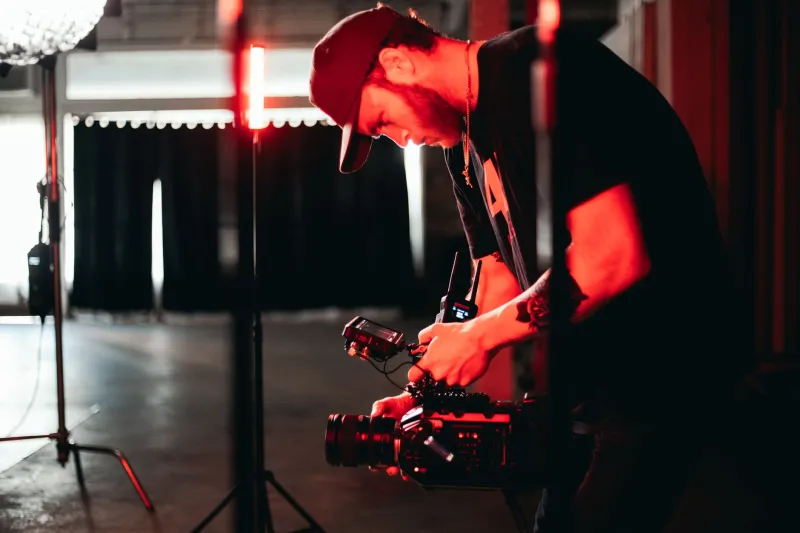
There's a moment — maybe you've noticed it without fully registering it — when a scene just looks extraordinary. The skin tones are warm and natural, the depth of field draws your eye exactly where it's supposed to go, and the camera movement feels fluid rather than clunky. That's not luck. That's the work of a cinematographer who actually gives a damn.
Adult content production has quietly undergone a technical revolution over the past decade, and the people holding the cameras are at the center of it. We spoke with several award-winning directors of photography who work across premium adult studios to get the real story on what goes into crafting high-definition visuals that hold up on a 4K screen.
Lighting Is Everything (and Most People Get It Wrong)
Ask any experienced adult DP what separates amateur work from professional output, and almost every one of them will say the same thing: lighting.
"You can hand someone a $10,000 camera and they'll still shoot garbage if they don't understand light," said one veteran cinematographer who has worked with several major US-based studios over a fifteen-year career. "The camera just records what's in front of it. Light is what you're actually designing."
In adult production specifically, lighting has to accomplish something tricky: it needs to be flattering and naturalistic at the same time. Harsh overhead lighting — the kind you'd see in a badly lit office — kills the mood and creates unflattering shadows. But going too soft can make a scene look flat and lifeless on a high-definition display.
The current industry standard leans heavily on LED panel arrays with adjustable color temperature, often paired with diffusion materials to soften the output. Many cinematographers working on premium content also use practical lights — bedside lamps, neon accents, candlelight effects — to create depth and a sense of environment that feels lived-in rather than staged.
Color temperature is another obsession. A warm 3200K setup reads as intimate and sensual, while cooler daylight-balanced setups (around 5600K) can feel clinical unless carefully managed. Most experienced DPs blend temperatures deliberately to add visual interest and guide the viewer's emotional response.
Glass Choices and the Bokeh Debate
Lens selection is where cinematographers start to develop real opinions — sometimes heated ones.
Prime lenses (fixed focal lengths) dominate premium adult production for a reason: they're sharper, let in more light, and produce that creamy background blur — bokeh — that signals "this is a quality production" to trained eyes. A 50mm or 85mm prime on a full-frame sensor is practically a genre standard for close work.
But not everyone agrees that maximum bokeh is always the goal. "There's a trend right now where everything is shot wide open at f/1.4 and half the frame is out of focus," one DP told us with a visible eye-roll. "It can look gorgeous, but you lose context. Sometimes you want the audience to see the environment."
Zoom lenses have made a comeback in certain production styles, particularly for content that leans into a more documentary or voyeuristic aesthetic. A well-corrected 24-70mm zoom gives a shooter flexibility when working in smaller spaces — a practical reality in a lot of US studio productions that don't have massive soundstage budgets.
Camera Movement: Handheld vs. Stabilized
This is where personal philosophy really diverges among cinematographers.
Handheld shooting — camera on the operator's shoulder, movement organic and slightly unpredictable — creates immediacy and energy. It feels participatory. A lot of POV-style content leans into this deliberately, and when it's done well, the slight instability reads as authentic rather than sloppy.
Stabilized shooting, whether on a gimbal, dolly, or slider, communicates something entirely different: control, intentionality, cinematic polish. Slow push-ins and lateral tracking shots signal to the viewer that someone is composing this deliberately. For premium content that's positioning itself as high-end, stabilized movement is often the default.
Many experienced DPs mix both within the same scene — stabilized for establishing shots and wide coverage, handheld for closer, more intense moments. "You want the viewer to feel the shift," one cinematographer explained. "Stabilized pulls them back a little, gives them the full picture. Then you go handheld and suddenly they're in it."
Color Grading: The Final Layer
Post-production color grading has become almost as important as the shoot itself, and premium adult studios have started investing seriously in dedicated colorists rather than leaving it to whoever edits the footage.
The goal in most high-end adult content is a grade that enhances without obviously distorting — warmer shadows, lifted blacks to avoid crushing detail, and careful skin tone management that looks accurate across a range of display calibrations. HDR delivery is increasingly a consideration, particularly for platforms that support it, since poorly graded content can look completely different on an HDR TV versus a standard laptop screen.
Some studios are developing their own proprietary LUTs (look-up tables) — essentially color presets — to give their content a recognizable visual identity across all releases. It's the same logic that major Hollywood studios use, and it signals a maturation of the industry's approach to brand identity through visual language.
What HD Actually Demands
Here's the uncomfortable truth that experienced cinematographers are quick to acknowledge: high definition is unforgiving. Shooting in 4K or higher resolution means every imperfection is visible — every poorly managed shadow, every soft focus, every unflattering angle. The technical bar for premium HD content is genuinely high.
That's actually what makes the craft interesting to the people doing it. "It keeps you honest," one DP said. "You can't fake your way through it. Either the frame works or it doesn't, and on a 4K monitor you know immediately."
For viewers who've noticed that some content just looks better than others, now you have a better sense of why. The best adult cinematographers are bringing real craft to every frame — and on a platform built around high-definition quality, that attention to detail is exactly what the audience deserves.