Pixels, Lenses, and Lighting: Inside the Tech Boom Transforming Adult Film Production
There's a moment when you're watching truly premium HD content and something just clicks. The skin tones look natural, the depth of field is cinematic, and every detail pops off the screen without a hint of compression artifacting. That experience doesn't happen by accident — it's the result of a massive, ongoing technological investment that's quietly reshaping how adult content gets made in America and beyond.
At HD Mad Thumbs, we're obsessed with quality. It's literally in the name. So we decided to pull back the curtain on the production tech that separates forgettable, grainy clips from the kind of premium content that genuinely rewards a big 4K display.
The Camera Revolution: From Consumer DSLR to Cinema-Grade Glass
Not that long ago, a lot of independent adult productions were shot on prosumer DSLR cameras — solid tools, but with serious limitations in dynamic range, low-light performance, and color depth. Fast forward to today, and the landscape looks radically different.
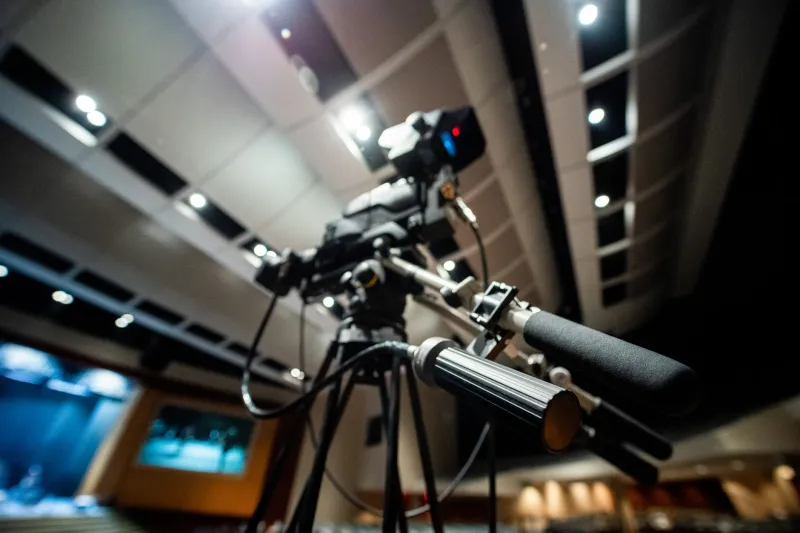
Production houses serious about quality have migrated toward dedicated cinema cameras. The Sony FX9, the Canon EOS C70, and especially the RED Komodo and ARRI Alexa Mini LF have become go-to choices for productions that want true cinematic imagery. These cameras capture footage in RAW or high-bitrate log formats, meaning colorists have enormous latitude in post-production to dial in the exact look a director is chasing.
8K capture is increasingly common, even for content that ultimately delivers at 4K. Shooting at a higher resolution and downscaling gives you sharper, cleaner 4K output — a technique borrowed directly from mainstream Hollywood productions. When you're watching a premium scene and thinking "this looks almost theatrical," that's often exactly why.
Lens choice matters just as much as the camera body. Prime lenses with wide apertures — think f/1.4 to f/2.8 — create that creamy background separation that instantly reads as professional. Anamorphic glass, traditionally the domain of big-budget feature films, has started appearing in higher-end adult productions, lending footage a distinctive widescreen character and subtle lens flares that feel genuinely cinematic.
Lighting: Where Amateur Productions Still Fall Short
If cameras have leveled up dramatically, lighting is where the gap between amateur and professional content remains most visible. Flat, harsh lighting is the telltale sign of a budget production. Premium content uses lighting setups that would feel at home on a network TV drama.
Soft, diffused light sources — large LED panels with diffusion frames, octaboxes, and practical lighting elements integrated into set design — create dimensionality and flattering skin tones that hold up under close scrutiny on a large 4K display. The shift from tungsten to LED technology has been a game-changer, giving cinematographers precise color temperature control and the ability to shape light with far more flexibility than older fixtures allowed.
Bicolor LED panels that shift seamlessly between warm and cool tones let lighting directors match practical sources in a room — a lamp here, a window there — creating an organic feel rather than that telltale "studio" flatness. Some higher-end productions have even started using RGBW LED systems that allow for subtle color grading right on set, reducing post-production workload while adding visual richness.
Post-Production: The Hidden Half of the Quality Equation
Shooting great footage is only half the battle. What happens in post-production determines whether all that careful work on set actually reaches viewers in the way it was intended.
Color grading has become a sophisticated craft in its own right. Professional colorists working in DaVinci Resolve — the industry-standard grading application — spend hours massaging footage through primary corrections and secondary node adjustments to achieve consistent, intentional looks. The difference between a thoughtfully graded scene and raw, unprocessed footage is immediately apparent, particularly on a calibrated 4K HDR display.
HDR (High Dynamic Range) delivery is the next frontier gaining traction in premium adult content. HDR10 and Dolby Vision masters preserve a much wider range of luminance information, meaning highlights don't blow out and shadows retain detail in ways that SDR content simply cannot match. On a capable display — an OLED TV or a high-end monitor — the difference is visceral.
Encoding and delivery optimization is a discipline that often gets overlooked in conversations about quality, but it's critically important. H.265 (HEVC) encoding delivers significantly better quality at equivalent file sizes compared to older H.264 compression, and AV1 is beginning to emerge as an even more efficient option for streaming platforms. Getting the encoding settings right — bitrate ladders, keyframe intervals, two-pass encoding — is what separates a stream that looks pristine from one that falls apart during fast motion.
Streaming Infrastructure: Getting Quality to Your Screen
Even flawlessly produced content can be undermined by poor delivery infrastructure. Adaptive bitrate streaming (ABR) systems — the technology that automatically adjusts video quality based on your connection speed — need to be tuned carefully to ensure that viewers with solid internet connections are actually receiving the highest available quality tier rather than defaulting to a middle-of-the-road bitrate.
Content Delivery Networks (CDNs) distributed across the US ensure that streams originate from servers geographically close to viewers, reducing latency and buffering. Premium platforms invest heavily in CDN infrastructure specifically because viewer experience at the delivery endpoint is just as important as what was captured on set.
Why This All Matters for Viewers
The practical upshot of all this technical evolution is simple: if you're watching on a quality display and you're not seeing content that genuinely impresses you, you're either on the wrong platform or watching older catalog material that predates the current quality era.
The best current productions are genuinely competitive with mainstream streaming content on a pure technical level. Sharp, detailed 4K resolution, accurate color reproduction, and clean audio — the full package is achievable and increasingly expected by audiences who've grown accustomed to premium viewing experiences across every other category of entertainment.
At HD Mad Thumbs, we curate with exactly that standard in mind. The thumbnails tell you a lot — sharp, detailed, well-lit previews are a reliable indicator of what the full content delivers. Muddy, low-contrast thumbs? That's your warning sign.
The technology is there. The productions using it are out there. Knowing what to look for just makes finding them a whole lot easier.