Smoother Than You Think: How 120fps Is Quietly Rewriting the Rules of Premium Adult Viewing

For decades, cinema locked itself into 24 frames per second. It was a technical compromise that became an aesthetic religion — so deeply embedded in how we experience moving images that anything faster started feeling wrong to a lot of people. Peter Jackson shot The Hobbit at 48fps back in 2012 and got absolutely roasted for it. Critics called it cheap, hyper-real, too much like a soap opera.
But here's the thing: adult content doesn't carry that same cultural baggage. There's no cinematic tradition to protect, no film school professors clutching their pearls over frame rates. And that's exactly why the premium adult industry is becoming one of the most interesting testing grounds for high-frame-rate video — and why 120fps might matter more here than anywhere else.
What Actually Changes When You Push Past 24fps
Let's get the basics out of the way first. Frame rate is simply how many individual images your screen displays every second. At 24fps, you're seeing 24 still images per second, and your brain stitches them into the illusion of motion. At 60fps, motion blur decreases noticeably and things start looking sharper during fast movement. At 120fps, you're in territory where the image almost stops feeling like a recording and starts feeling like a window.
The technical term for what you're perceiving is motion clarity — and it's distinct from resolution. You could have a gorgeous 4K image at 24fps and still see significant blur during any fast lateral movement. Meanwhile, a 1080p clip at 120fps can look startlingly vivid during the same kind of motion. Resolution tells you how sharp a still frame looks. Frame rate tells you how sharp a moving frame looks. For content that's fundamentally about physical movement, that distinction is enormous.
The human visual system can detect motion artifacts well above 60fps under the right conditions. Research has shown perception of smoother motion up to around 120fps in high-contrast, fast-moving scenarios — exactly the kind of visual environment that premium adult content creates. So unlike, say, a slow-paced drama where 24fps barely registers as a limitation, high-energy intimate content is precisely the use case where higher frame rates pay off most visibly.
The Production Headache Nobody Talks About
Shooting at 120fps sounds straightforward until you actually try to do it at a professional level. The challenges stack up fast.
First, there's the light problem. Higher frame rates mean shorter exposure times per frame, which means less light hitting the sensor per frame. To compensate, you either need significantly more lighting on set — which changes the look and feel of the shoot entirely — or you're pushing your camera's ISO higher, which introduces noise. Neither option is free, and neither is invisible.
Then there's storage. A single hour of 4K footage at 24fps is already a substantial file. At 120fps, you're generating five times as many frames for the same duration. Production teams that haven't scaled their storage infrastructure are going to feel that pain immediately. Post-production timelines stretch out too — editing, color grading, and encoding all take longer when you're working with that much raw data.
Not every camera system handles high-frame-rate 4K gracefully either. Some crop the sensor, changing the effective focal length of every lens on the rig. Others drop to 10-bit color depth at higher frame rates, sacrificing the color richness that defines premium production. These are real trade-offs that serious adult studios are actively navigating right now.
Can Your Stream Even Handle It?
Producing high-frame-rate content is one challenge. Getting it to a viewer's screen intact is a completely different beast.
Streaming 4K at 24fps already demands a solid 25 Mbps connection for a quality encode. Push that to 4K at 120fps and you're potentially looking at 80 to 100 Mbps depending on the codec and compression settings. Most American households with broadband can technically hit those speeds, but sustained throughput during peak hours is a different conversation entirely. Buffering that would be invisible at 24fps becomes jarring at 120fps because the smoothness of the image makes any interruption feel more abrupt by contrast.
Platforms that want to serve genuine 120fps content need adaptive bitrate systems sophisticated enough to gracefully step down frame rate — not just resolution — when bandwidth tightens. That's a harder engineering problem than it sounds, and most current adaptive streaming setups weren't designed with frame rate as a primary variable to manage.
Codec choice matters too. AV1 is currently the most efficient option for high-frame-rate delivery, offering roughly 30% better compression than H.265 at comparable quality levels. But AV1 encoding is computationally expensive, and not every device in a viewer's home can decode it in hardware. Premium platforms are caught between serving the cutting edge and not alienating the large portion of their audience watching on hardware that's three or four years old.
The Viewer Side of the Equation
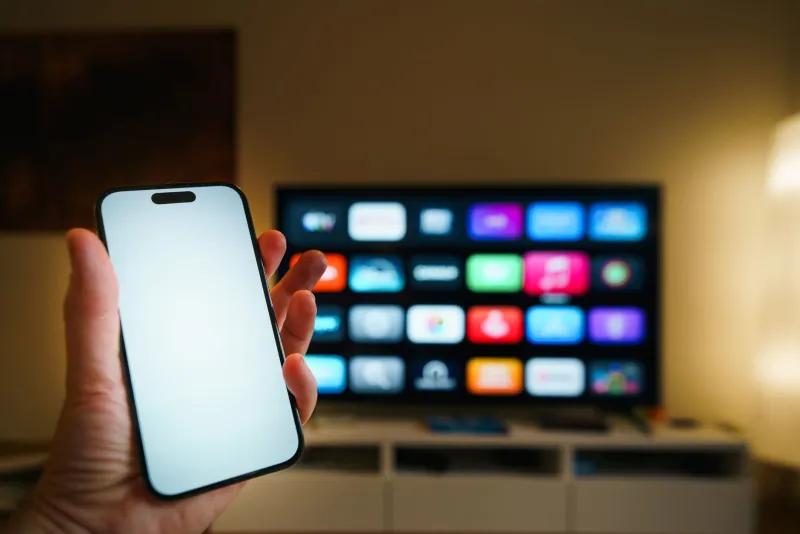
All of this is moot if what's on the receiving end can't display it. Most consumer TVs sold in the US since 2020 support 120Hz refresh rates — including most mid-range OLED and QLED panels. Gaming monitors have been running at 120Hz and above for years. So the hardware is increasingly out there.
The sticking point is the source chain. Streaming apps on smart TVs frequently don't pass 120fps content even when the panel supports it, because the app itself was built to a lower spec. HDMI 2.1 is required for 4K at 120fps, and while it's standard on newer devices, plenty of soundbars, receivers, and older TVs in the signal chain still run HDMI 2.0. One weak link and the whole thing drops back to 60fps or lower.
For viewers who are genuinely set up for it — newer gaming monitor, PC or console doing the streaming, HDMI 2.1 throughout — the experience of watching premium adult content at 120fps is legitimately different. Motion that would have smeared into blur at 24fps stays crisp. The tactile, physical quality of the imagery becomes more pronounced. It's not subtle once you've seen it.
Why the Adult Industry Is Actually Ahead of the Curve Here
Mainstream Hollywood is still largely resistant to high-frame-rate production. The aesthetic arguments are real, and the economics of theatrical distribution make format experimentation risky. Adult platforms don't have those constraints. They distribute exclusively through digital channels, they update their libraries constantly, and their audience is largely watching on personal screens where frame rate improvements are most perceptible.
Some of the more forward-leaning premium studios are already offering 60fps as a standard tier and experimenting with 120fps as a differentiator for their top-shelf content. It's a genuine competitive angle — one that speaks directly to the kind of viewer who cares about picture quality and is willing to pay for it.
The refresh rate revolution isn't coming to adult content. It's already here. The question is just how fast the rest of the infrastructure catches up.